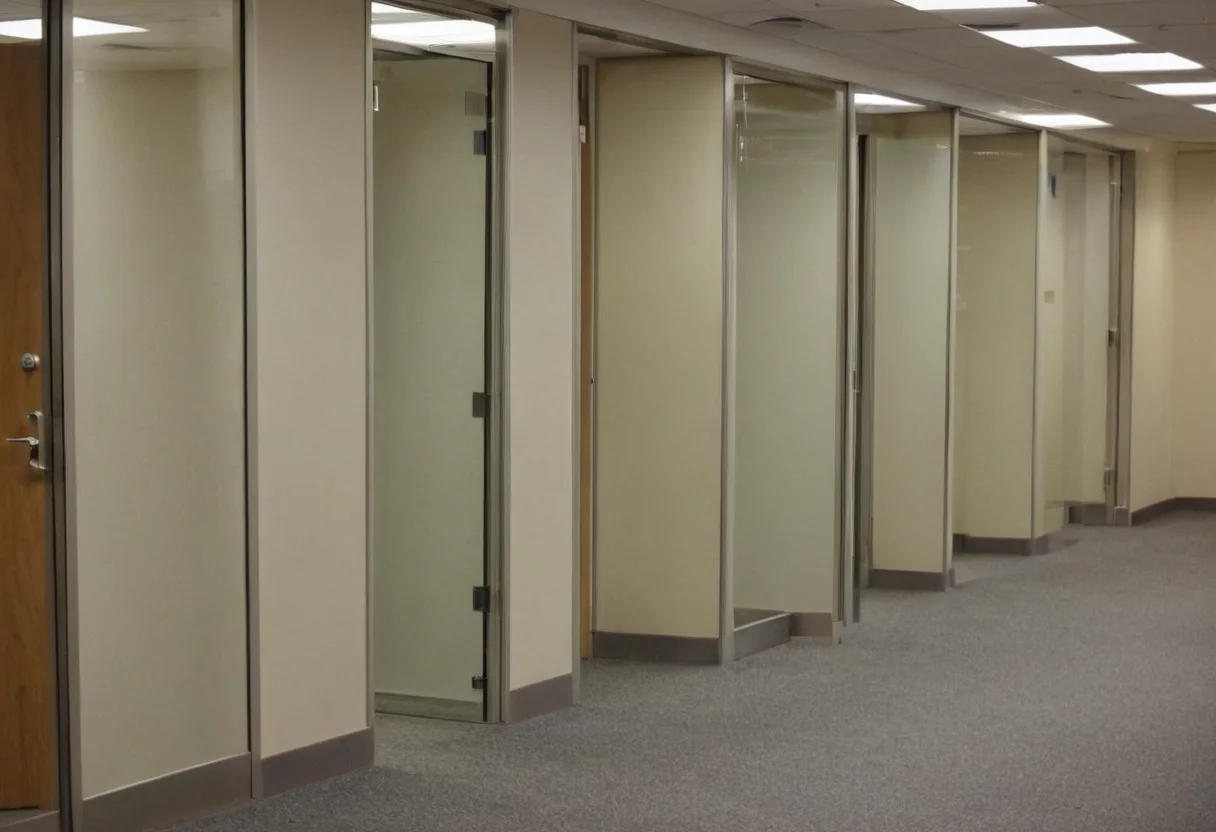
Large boardrooms are easy to count. Two-person calls, interviews and confidential conversations arrive in smaller units and higher frequency, which is why small rooms disappear first.
Measure demand by group size
Record occupancy and duration, not merely bookings. A large room used by one person is evidence of a missing room type. The consequences become visible to visitors through the workplace signals candidates notice.
Acoustic privacy is part of capacity. A room that leaks speech cannot host sensitive work; coordinate ceiling, partitions and doors through the acoustic budget.
Distribute, do not cluster
Place small rooms near teams but outside major desk sightlines. Their doors, hardware and seals belong in the complete door schedule, not a late furniture plan.
Support the gaps
A tea point should not become the default confidential room; plan it using the queue and circulation test. Track actual usage after occupation and document controls in the operational handover.