
A furniture submittal is the last point at which a specification can still be corrected on paper rather than on site. Once the order is released, the drawing, the finish sample and the test report become the contract, and anything left vague in them turns into a variation later. Studios that work in classic interior design, among them Modenese Interiors, an Italian practice that carries design, fit-out and bespoke joinery inside one contract, resolve the same package before production begins. What follows is the review order that catches the expensive gaps first.
What the submittal package has to contain
A complete package answers three separate questions: what the piece looks like, how it is built, and what it has been tested against. Most disputes on delivery trace back to a package that answered the first question in detail and left the second and third to a product photograph and a brochure line.
| Item | What it proves | What it does not prove |
|---|---|---|
| Dimensioned drawing | Fit against the plan and the clearances around it | Build quality or material grade |
| Finish sample | Colour, sheen and texture of the visible surface | Performance of the substrate under the finish |
| Test report | The named standard was applied to a named sample | That the standard matches the use in this project |
| Cutaway or build section | Frame material, joints and fixings out of sight | Consistency across a production run |
The build section carries the most weight and appears the least often. A frame drawing shows whether the seat rails are jointed or stapled, whether the arm is a continuous member or a butt joint under fabric, and whether a spring unit sits on webbing or on a solid deck. None of the four is visible after upholstery.
Why a standard number on a report is not enough
A test report states which standard was applied, and the number alone tends to end the conversation. It should start one instead, because every furniture standard has a scope clause that names the intended use, and a report proves compliance only for the use the standard was written for.
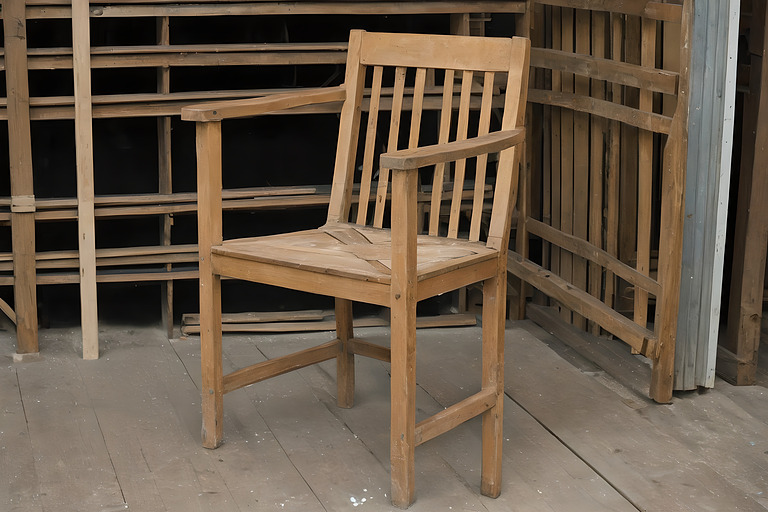
The clearest example sits in seating. EN 12520 sets strength, durability and safety requirements for domestic seating, with a load basis of 110 kg. A chair certified to it has passed a domestic test regime, which says nothing about a hotel lobby where the same chair is dragged sideways across stone twenty times a day for a decade.
What to ask when the scope does not match the project
The question to a supplier is narrow and answerable: which standard was applied, which use level inside it, and on which component. Non-domestic and contract seating is covered by separate standards with their own use levels, and the exact designation belongs in the report rather than in a sales description of the product.
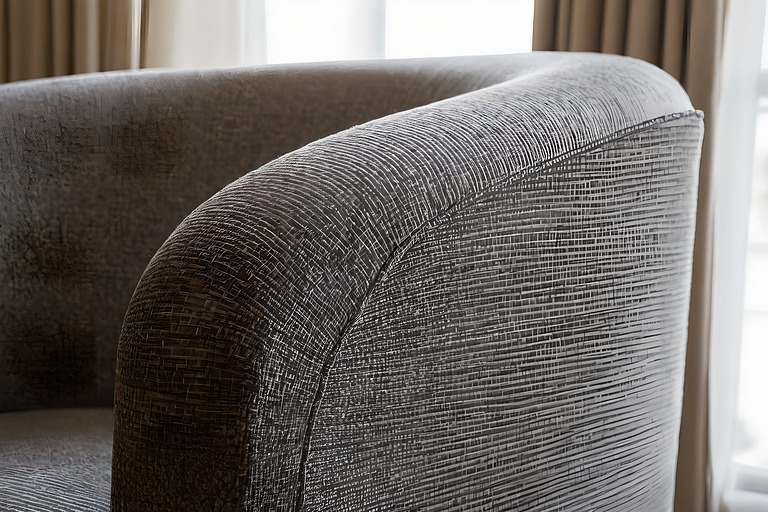
Upholstery invites the same discipline. An abrasion figure quoted from a Martindale test marks the point at which the sample was inspected and no breakdown had appeared yet, so the number is a lower bound produced by rounding down, not a service life. Two fabrics carrying one figure can behave differently on the arm of a chair.
Which dimensions have to be confirmed on the drawing
Overall width, depth and height are the dimensions everyone checks and the ones that cause the fewest problems. Trouble comes from the secondary dimensions that decide whether a piece works in the room and whether it can reach the room at all through the building as built.
- Seat height and seat depth, which govern comfort far more than overall height does.
- Arm height against the table or desk the piece will sit at.
- Diagonal packed dimension against the tightest door, lift and corridor on the delivery route.
- Foot or glide detail against the floor finish, which decides whether the piece scars stone or timber.
The delivery route deserves a drawing of its own on any project above ground level. A lobby sofa that clears the loading bay and fails at the lift lobby returns to the factory for splitting, and the cost lands on the programme rather than on the furniture budget.

What the order should tie down beyond price
An order that states model, finish, quantity and price is only half an order for a commercial interior. The other half concerns what happens after handover, when a single damaged component decides whether the operator repairs one piece or replaces a matched set of twelve.
- Batch reference for every finish and fabric, recorded against the delivery.
- Named replacement parts: glides, arm caps, seat cushions, keys and touch up kits.
- Availability period for the finish and fabric, in writing, from the supplier.
- Cleaning and maintenance instruction sheets, in the operator language.
Why replacement parts belong in the first order
A finish sold today is not necessarily available in two years, and a fabric run is finite in a way a catalogue photograph never suggests. Ordering spare components with the original delivery costs a fraction of a percent of the package and removes the most common cause of a mismatched replacement later.
Storage is the part that gets forgotten. Spare cushions and fabric lengths need a dry, labelled place in the building, recorded in the handover manual with the batch reference. A spare kept in an unlabelled box in a basement plant room is functionally the same as no spare at all.